Smile Club Typeface Review for Brand Design
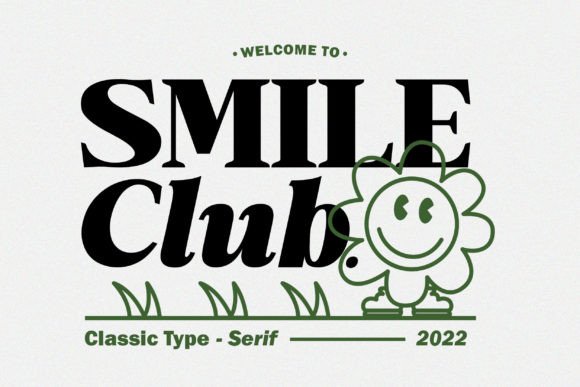
When I opened a blank brand board for a local artisanal bakery refresh, I needed a typeface that felt established yet approachable. Smile Club immediately caught my eye as a standout option among the many Serif Fonts cluttering my library. This cool and classic serif font brings a distinct personality to display work, balancing traditional structural integrity with a modern, relaxed vibe. It is not just another digitized Times New Roman; it has character curves and spacing that suggest warmth without sacrificing professionalism. For designers seeking a reliable tool for product designs or headline work, this font offers a compelling mix of nostalgia and contemporary clarity.
Using Smile Club for Logo Design and Brand Identity
In my initial tests, I placed Smile Club on several logo drafts to see how it handled weight and scale. As a Serif typeface, it relies on strong vertical strokes and subtle bracketed serifs to anchor the design. When used in all-caps for a boutique identity, the font exudes confidence. The letterforms are wide enough to allow for generous tracking, which is crucial for creating high-end visual hierarchy. I found that Smile Club works exceptionally well when you need a logo that feels handmade but polished. It avoids the stiffness of corporate geometric fonts, offering instead a humanist touch that resonates with audiences looking for authenticity. For brand identity systems, this means your primary mark can carry significant emotional weight while remaining legible across various applications.
Enhancing Packaging Design with Classic Serif Typography
One of the strongest use cases for Smile Club is in packaging design. I mocked up a label for a skincare line, placing the font against a textured paper background. The result was striking. Because Smile Club is a cool and classic serif font, perfect for your display or product designs, it holds its own even when printed at smaller sizes on curved surfaces. The contrast between thick and thin strokes adds a tactile quality that flat sans-serifs often lack. On a physical product, these details catch the light and draw the eye. Whether you are designing for coffee bags, candle jars, or cosmetic boxes, this font provides the premium aesthetic that justifies a higher price point. It transforms simple text into a design asset that communicates quality before the customer even reads the ingredients list.
Smile Club Performance in Web Design and Social Media Graphics
Digital environments present different challenges than print, particularly regarding screen resolution and loading speeds. I tested Smile Club in website headers and hero sections, and it performed admirably. As one of the more versatile Fonts in the Serif category, it maintains readability on backlit screens when used at larger point sizes. For social media graphics, such as Instagram carousels or Pinterest pins, the font’s distinctive shapes help stop the scroll. It stands out against the sea of minimalistic sans-serifs that dominate feed aesthetics. However, it is important to note that this is primarily a display font. I would not recommend using it for long paragraphs of body text on a mobile device. Instead, use it for quotes, titles, and call-to-action buttons where impact matters more than dense information delivery.
Pairing Smile Club with Sans Serif and Script Fonts
A common question I receive is how to pair this typeface effectively. Since Smile Club has a strong personality, it benefits from neutral companions. In my recent project, I paired it with a clean, geometric sans serif for subheadings and body copy. This combination creates a balanced modern typography system where the serif provides flair and the sans serif ensures clarity. Alternatively, for a more romantic or vintage feel, you might experiment with a delicate script font for accents. The key is to let Smile Club be the star. Do not overcrowd it with other decorative elements. If you are working on editorial design or a magazine layout, consider using a lightweight version of a complementary serif for captions, ensuring that the visual hierarchy remains clear and intuitive for the reader.
Practical Considerations for Commercial Font Licensing
Before integrating Smile Club into client work, always review the specific licensing terms. While it is an excellent choice for commercial design assets, including merchandise and print-on-demand products, you must ensure your license covers the intended usage. For webfont availability, check if the package includes WOFF or WOFF2 files to ensure fast loading times on your client’s site. Additionally, examine the included styles and alternates. Some versions of classic serif fonts offer ligatures or swashes that can add unique touches to logos. Testing these features in your design software allows you to customize the look further, making your brand identity truly unique. Always keep a record of your license proof to protect both yourself and your client from legal issues down the line.
Limitations and Best Practices for Display Use
While Smile Club is a powerful tool, it is not a universal solution. Its strength lies in its display capabilities. Attempting to use it for small print, such as footnotes or dense legal text, will likely result in poor readability. The intricate details of the serifs can blur at very small sizes, especially on lower-resolution screens. Therefore, reserve this font for headlines, posters, flyers, and short phrases where it can breathe. If you are designing a complex annual report or a textbook, stick to a more functional sans serif for the bulk of the content. By respecting the font’s intended purpose, you ensure that every instance of Smile Club enhances the design rather than hindering communication. This disciplined approach separates amateur layouts from professional brand systems.
Ultimately, adding Smile Club to your toolkit expands your ability to create warm, inviting, and professional designs. It bridges the gap between traditional elegance and modern casualness, making it a valuable asset for any designer working with lifestyle brands, boutiques, or creative studios. Whether you are crafting a new logo, refreshing packaging, or building a social media presence, this cool and classic serif font delivers consistent, high-quality results. Test it in your next project, observe how it interacts with your color palette and imagery, and decide if its unique voice aligns with your creative vision. With careful pairing and strategic placement, Smile Club can elevate your work from standard to memorable.